


Special Schools Nursing Newsletter – Winter Edition 2025
Our Special School Nursing Team continue to work across the Greenwich and Bexley Special Schools.
The current Team comprises of Nurses, Nursery Nurses, and Health Care Assistants.
Staffing Update
We take this opportunity to wish our Health Care Assistant, Aja Kebbeh, all the very best as she commences maternity leave at the end of this school term.

Download a PDF version of:
Millie Price, continence advisor, will be taking nine weeks study leave at the start of the new year and we wish her well.
Rebecca Garnett and Susan Wood (HCAs) will be helping with continence advice during Millie’s absence.
Nursing continues to provide many services including: Phlebotomy, continence advice, annual nursing reviews, weights and heights, support for parents/carers and pupils, health assessments, health promotion, devising and updating care plans and hospital passports, safeguarding, collaborate working with education, allied health professionals, and parents/carers.
The Special School Nursing Team support with sharing hospital passports for 14yrs to 18yrs as to ensure that hospital visits and any transition to hospital is effective.
To continue to maintain nursing standards, we are making good use of our new purpose-built training simulation suite at our Goldie Leigh base, to ensure the highest training standards are achieved and maintained for all our staff and parents alike.
Tier 3 Weight Management Programme
The Tier 3 weight management programme is still happy to receive referrals for children/young people living with complex obesity within the borough of Greenwich. To qualify for a place on this programme the child/young person must be a Greenwich resident, under 18yrs, and be registered with a Greenwich GP.
The programme runs for a period of one year from acceptance by referral. A referral can be made from the GP, Dietician, Paediatrician or School Nursing Team. For more information about this service please contact either your GP, Dietician, Paediatrician or Nancy Williams (School Nursing) on 0208 294 3122.
Continence
Here are the contact details for any of our families with children/young people who use continence products, or require help or advice with continence:
Parent contact number for the continence service: 0800 030 4466
Email address: oxl-tr.cypcontinence.inclusion@nhs.net
Medication
Please can we remind parents and carers that if their child/young person requires a prescribed medication to be administered during the school day please ensure that the medication contains a prescription label and is in date.
Please be aware that any medications prescribed to be administered three times a day should not be sent into school, as these can be given at home i.e., Morning, after school and bedtime. Only medications that are prescribed to be given four times a day should be sent into school. The exception would be if the prescription label specifies an actual time for a medication to be administered that falls during school hours.
Patient Feedback
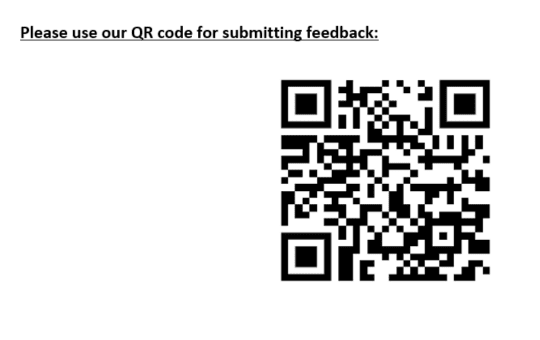
It is very important that the Special Schools Nursing Team continue to provide a good standard of practice for the children and families we look after. For our service to maintain these standards and make improvements it is necessary to ask for feedback. This happens in a variety of ways, word of mouth, paper surveys and electronic surveys.
If you are asked for feedback, please can you spare some time to provide this as it helps us to improve the service we provide. All feedback received is welcomed and important to our service.
Hospital Passports
Please can parents/guardians of all young people over the age of 14yrs ensure that the information is correct on their hospital passport, and that it is shared with nursing. If your young person’s hospital passport requires updating, please email Nursing on:
oxl-tr.cypinclusionteam@nhs.net
Asthma/Allergies
A reminder for all parents/guardians with children/young people with Asthma to be mindful that colder weather conditions can trigger asthma symptoms in some people. As the season changes it brings with it cold air which can irritate airways, increase the production of mucus and forces everyone indoors where you can be exposed to mould, damp, dust mites, pet hair, cigarette smoke and cleaning products.
Please ensure that your child/young person always has access to an in-date reliever inhaler, (normally blue). If your child/young person has been prescribed a steroid preventer inhaler, (usually brown), please ensure that this is administered at home daily as prescribed.
Your child/young person should have a written asthma plan from their GP surgery and should be offered regular asthma reviews. If your child/young person has not been invited for an asthma review for some time, please contact your GP to make an appointment.
The winter months bring colder and damper weather conditions which can aggravate asthma and allergies. If your child/young person requires more of their inhaler, or has prescribed medications for allergy relief, please inform the school nursing teams so that we can accommodate your child/young persons needs in school.
Coughs, Colds, Flu & Respiratory Illnesses
With the approach of Winter comes an emergence of coughs, colds, flu, and other respiratory illnesses. Many of these can be treated effectively with over-the-counter medications from your local pharmacy.
If your child/young person is experiencing a cold or cough which is lasting longer than normal and not being eased by over-the-counter medications, please seek advice from your GP or 111.
Antibiotics are not recommended for the common cold or flu as they are only effective against bacterial infections. Colds and flu are caused by viruses.
Please ensure that your child/young person has their flu jab and Covid jabs, if eligible.
Rashes & Common Childhood Illnesses
The nursing teams are happy to advise if children/young people are presenting as unwell and will do our best to signpost to other medical professionals.
Please remember that the nursing team are unable to diagnose. Any rashes and/or symptoms of common childhood illnesses should always be diagnosed by an appropriate medical professional.
Please adhere to medical advice received and do not send your child/young person back to school until they have fully recovered and are deemed no longer contagious. This will ensure that the other vulnerable children attending the special schools will be protected.
Baseline Assessments
Nursing undertakes baseline yearly observations on children with complex needs that attend our special schools. These assessments involve: temperature check, oxygen saturations, respiratory rate, blood pressure and heart rate. These observations help nursing and other allied health professionals to recognise the signs and symptoms of any illnesses that may present in our client group and act quickly and appropriately to ensure that every child remains in the best of health.
Keeping Warm & Well This Winter
Wintertime is associated with an increase in illnesses and injuries owing to wintry weather conditions. This combined with low levels of sunlight, now that the clocks have gone back, means that some people can feel in poor health. Severe cold weather can have dramatic effects on everyday life, especially for those people who are already vulnerable because of illness, disability, and age.
Please ensure that your child/young person is dressed appropriately for the weather conditions this winter. Dress your child/young person in several thin layers. Wearing layers helps to trap air and keeps warmth in.
Clothes made from cotton, wool or fleecy fibres are particularly good and help to maintain body heat. By layering clothes, your child/young person can then discard outer layers of clothes on arrival into a warm building and re layer when going outside.
Please allow for your child going outside of the school building during the school day so hats, scarves and gloves should be sent in during cold weather conditions.
If your child/young person is mobile, please ensure that they wear shoes/trainers with a good grip to prevent slips and falls when outside.
If your child/young person is not mobile, they can be more susceptible to temperature changes, owing to a lack of movement, so please ensure that they have warm socks/cosy toes, and enclosed shoes. Some immobile children/young people will require gloves/mittens indoors for the same reason.
If your child/young person is resistant to wearing certain items of clothing or is an independent dresser try using visual storyboards showing different types of weather and appropriate clothing for each. If this is unsuccessful speak with education staff about incorporating this in their class activities.
Be Prepared
- Winter months can be harsh and as a parent or carer looking after yourself is vital for the whole family as you need to be well to be able to care for your dependents.
- Make healthy nutritious meals in advance and freeze them.
- Ensure enteral feeds are in date and that you have a sufficient supply.
- Plan times in the day to relax and do less, particularly around busy holiday periods.
- Schedule in regular physical activity within your abilities.
- Keep the lines of communication open with friends and family.
- Eat foods that boost your Vitamin D.
- Establish a good sleep routine for you and your young person.
- Ensure that you and your young person have the recommended immunisations and vaccinations.
- Practice good hand hygiene.
- Ensure all medications are supplied and in date.
- Plan your warm winter clothing wardrobe for the family.
- Heat your home to at least 18 degrees centigrade.
- Keep a stock of in date over the counter medications in case you cannot leave the house.
BE KIND TO YOURSELF AND OTHERS
HAVE AN AWARENESS OF SEASONAL AFFECTIVE DISORDER (SAD), ANXIETY & OTHER MENTAL ILLNESSES.
Seasonal Affective Disorder is a type of depression that you can experience during particular seasons, or times of year. Depression is a low mood that lasts for a long time and affects your daily life. If you have SAD, you’ll experience depression during some seasons, or because of certain types of weather or temperature.
Some people find that they have a low mood during the winter months. Most people are affected in some way by the seasons changing and it’s normal to feel more sluggish during wintertime.
However, for some people the effect on our mood and energy levels can be much greater, often impacting on daily life.
If you experience depression at other times of the year, then SAD can make this worse.
Some people can use self care strategies to help manage SAD and some need extra support to do this. If you do experience SAD, you can try light therapy by purchasing a light box.
If you find that your SAD symptoms are starting to have a significant impact on your day-to-day life, then talk to your GP. Your GP will be able to advise you and give further information and possible treatment options.
SYMPTOMS OF SAD:
- Lack of energy.
- Difficulty concentrating.
- Not wanting to see people.
- Feeling sad, low, tearful, guilty, or hopeless.
- Feeling anxious, angry, and agitated.
- Being more prone to physical health problems, such as colds, infections, or other illnesses.
- Sleeping too much, or difficulty waking up (common with SAD in winter).
- Changes in your appetite, for example feeling hungrier or not wanting to eat.
- Suicidal feelings.
- Other symptoms of depression.If you or any family members have other mental health problems, you might find that things get worse at times when you’re affected by SAD.ANXIETY is often worse in winter owing to the lack of sunlight and lower vitamin D levels. Also, people tend to stay indoors more during winter months so are less active which can affect mood and sleep patterns. For some families’ financial concerns can become more pressing during the festive period which can affect anxiety levels. And for some people they may feel more isolated and lonelier.
Useful Contacts
Useful contacts that may help you if you think you suffer with SAD/Mental Health Illnesses or are feeling in need of support, or know someone who is:
OXLEAS crisis line 294 3122
NHS UK Information about health problems and treatments, including details of local NHS services in England.
Samaritans 116 123 (freephone) – jo@samaritans.org
Samaritans are open 24/7 for anyone who needs to talk. You can visit some Samaritans branches in person.
Mind’s helplines provide information and support by phone and email.
Local Minds offer face-to-face services across England and Wales. These services include talking therapies, peer support and advocacy.
Side by Side is our supportive online community for anyone experiencing a mental health problem.
Anxiety UK 03444 775 774 (helpline), 07537416905 (Text), anxietyuk.org.uk – Advice and support for people living with anxiety:
British Association for Counselling and Psychotherapy (BACP) Bacp.co.uk Professional body for talking therapy and counselling. Provides information and a list of accredited therapists.
Campaign Against Living Miserably (CALM) 0800 58 58 58 – thecalmzone.net Provides a helpline and online chat, as well as information and support, for anyone affected by suicide or suicidal thoughts.
Rethink Mental Illness 0808 801 0525 – rethink.org Support and information for anyone affected by mental health problems, including local support groups.
Sane 0300 304 7000 – sane.org.uk Offers emotional support and information for anyone affected by mental health problems, including a helpline.
Lifeline 0808 808 8000 – A free 24/7 crisis response helpline for those experiencing distress or despair.
Always remember to reach out to your GP as they can help and signpost you to the most appropriate service that is right for you and your family.
Stay safe and well this winter and we wish you all a healthy and happy Holiday!